English
Asian Fit Spectacles: Measurements to Confirm and Fit Options Buyers Should Request
Finding frames that stay in place is key for comfort. Standard frames often slip down or sit on your cheeks. That's why we focus on customized eyewear to fix these issues.
Many people find Asian fit glasses helpful. They have adjusted nose pads and less curved frames. These changes make them more stable for those with unique faces.
Asian fit spectacles
Choosing the right pair means knowing your face's dimensions. We will show you how to measure your bridge and temple width for a secure fit. We aim to make you confident in your eye health choices.
Key Takeaways
- Larger nose pads provide a secure grip to prevent sliding.
- Frames with reduced curvature offer a better experience for wider face shapes.
- Correct bridge measurements ensure the lenses sit properly on the face.
- Specially angled frames help avoid contact with high cheekbones.
- Unique frame selections provide greater comfort than standard products.
- Measuring your face at home is a simple way to find your size.
1. Understanding the Unique Design of Asian Fit Frames
Asian fit spectacles are made for unique facial shapes. They offer a more comfortable and secure fit. These frames are designed with different facial features in mind.
What Makes Asian Fit Different from Standard Frames
Asian fit frames have a wider nose bridge width. This fits flatter nose bridges found in many Asian faces. It's key for a comfortable fit without slipping.
Common Fit Issues with Traditional Spectacles
Traditional frames can be a problem for some faces. They might have temples that are too long or too short. This causes discomfort. Asian fit frames have temples that fit better, matching head size and shape.
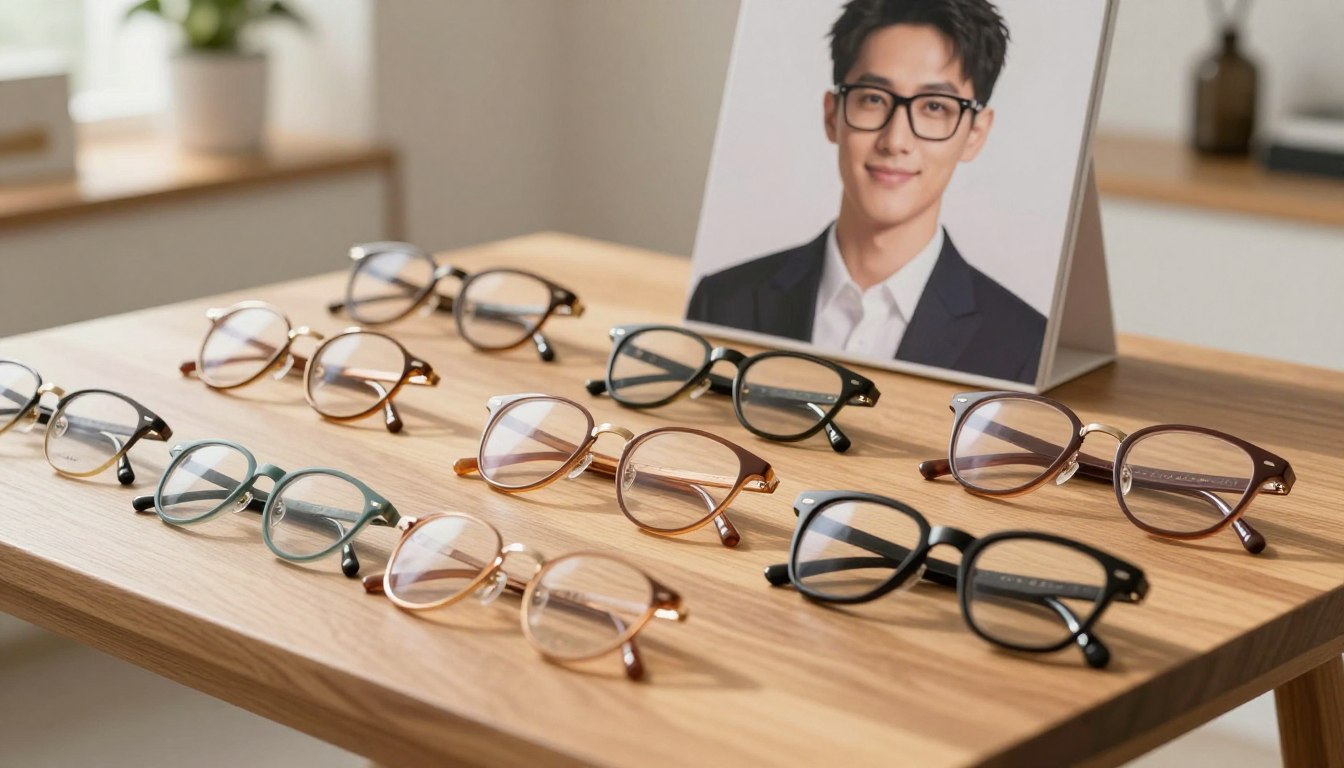
A close-up view of a stylish collection of Asian fit spectacles, displayed on a sleek, modern wooden table. In the foreground, various frames in different colors and designs—round, rectangular, and cat-eye—showcase their unique features such as wider nose bridges and flatter temple arms. The middle ground contains a softly blurred image of a professional, well-dressed Asian model wearing a pair of the frames, smiling confidently. A warm, natural light source illuminates the scene, casting gentle shadows that enhance the textures of the glasses and the table. The background is softly blurred, featuring a minimalist indoor setting with plants and elegant decor, creating a calm and inviting atmosphere that emphasizes the importance of comfort and style in eyewear design.
Key Structural Differences in Asian Fit Eyewear
Asian fit frames also differ in lens height and frame depth. They have a lower lens height for lower nose bridges. And a deeper frame for a snug fit.
Feature | Standard Frames | Asian Fit Frames |
Nose Bridge Width | Narrower | Wider |
Temple Length | Standard length | Adjusted for better fit |
Lens Height | Standard height | Lower to accommodate lower nose bridges |
Frame Depth | Standard depth | More pronounced for a snug fit |
Experts say, "The secret to comfy eyewear is knowing facial shapes and making frames for them." This shows why Asian fit frames are better for those who don't like standard frames.
2. Essential Measurements for Asian Fit Spectacles and Fit Options to Request
Getting the right measurements is key for Asian fit spectacles. They need to fit well and look good. The face shape of many Asians requires special adjustments for comfort and style.
Critical Measurements You Need to Know
Several important measurements are needed for the perfect fit. These include the nose bridge width and height, temple length and angle, and lens height and frame depth.
Nose Bridge Width and Height
The nose bridge width is very important. It affects how the spectacles sit on your nose. If it's too big, they might slide down. If it's too small, they might press on your nose.
The height of the nose bridge also matters. It determines where the lenses sit in front of your eyes.
Temple Length and Angle
The temple length should match your head size. This ensures the spectacles stay in place without being too tight or too loose. The angle of the temple is also key. It needs to fit comfortably around your ear.
Lens Height and Frame Depth
The lens height impacts the spectacles' fit and look. A frame that's too deep might make your eyelashes touch the lenses. A frame that's too shallow might not cover enough.
The frame depth is also crucial. It affects how comfortable the spectacles are and if they stay in place.
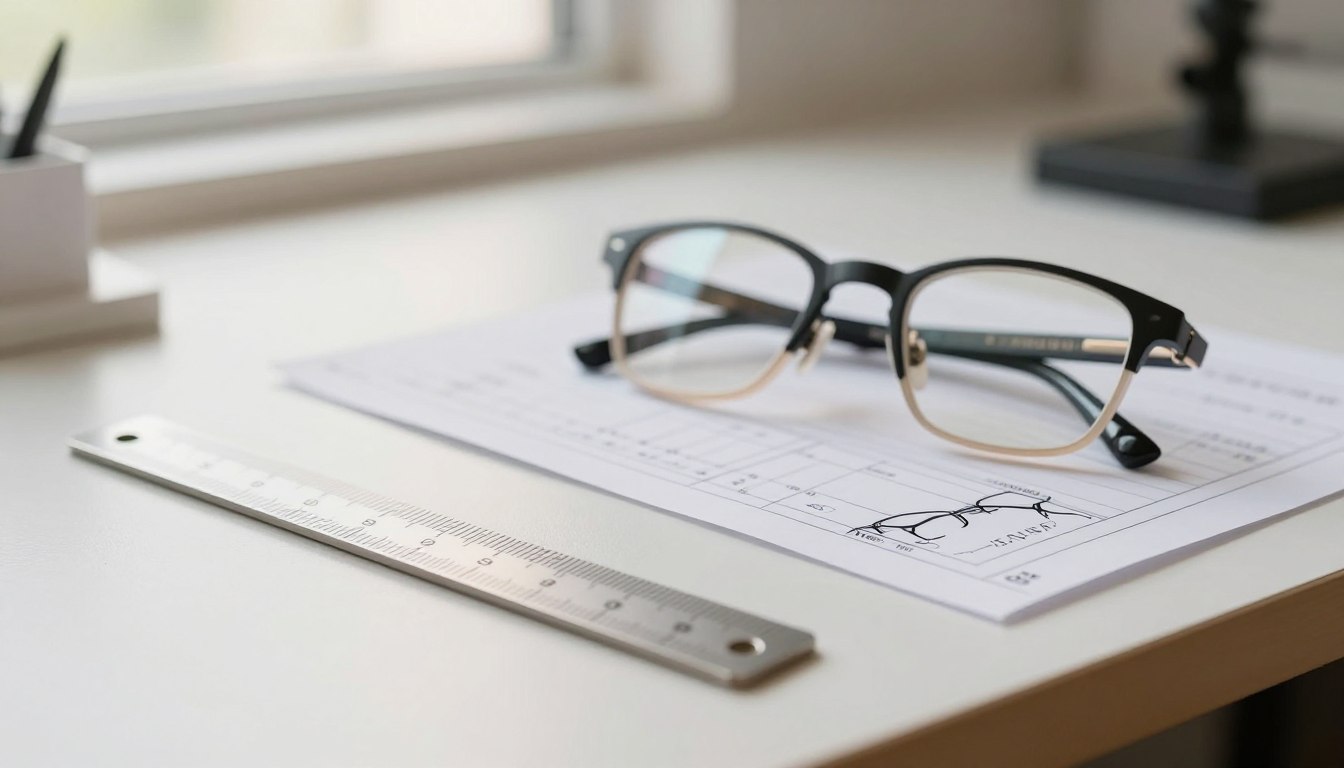
A close-up view of a professionally designed workspace focused on measuring spectacles specifically tailored for Asian fit. In the foreground, a sleek measuring tool with precise gauge lines and markings rests on a clean, light-colored table. The middle area features a pair of Asian fit spectacles sitting beside a detailed measurement chart illustrating essential dimensions such as bridge width, lens height, and temple length. In the background, a soft, diffused natural light filters through a nearby window, creating a warm, inviting atmosphere. The overall mood is professional and informative, ideal for demonstrating the importance of accurate measurements in eyewear fitting. No text overlays or branding visible.
Customization Options Buyers Should Request
There are several customization options to improve the fit and comfort of Asian fit spectacles. These include adjustable nose pads, modified temple design, and adjustments to the frame tilt and pantoscopic angle.
Adjustable Nose Pads
Adjustable nose pads let you customize the fit. You can adjust how far the lenses are from your face.
Modified Temple Design
A modified temple design can make the spectacles more comfortable around your ears. It reduces pressure and discomfort.
Frame Tilt and Pantoscopic Angle
Adjusting the frame tilt and pantoscopic angle ensures the spectacles align with your eyes. This improves both comfort and vision.
How to Measure Your Face at Home
Measuring your face at home is easy with a ruler or flexible measuring tape. Start by measuring the width of your nose bridge, the length of your temples, and the height of your lenses. Compare these measurements with the spectacles you're interested in to make a better choice.
Knowing these measurements and customization options helps ensure a comfortable and stylish fit for your Asian fit spectacles.
Finding Your Perfect Asian Fit Spectacles
Understanding Asian fit frames is key to finding the right spectacles. Knowing the important measurements helps ensure a comfortable and stylish fit. Customization options for eyewear make this possible.
We've shown you the differences between Asian fit and standard frames. We've also talked about the importance of accurate measurements. You can measure your face at home with our tips.
When looking for customized eyewear, know your facial structure and eyewear needs. This knowledge helps you make a smart choice. You'll find spectacles that look great and feel comfortable.
FAQ
What exactly are Asian fit spectacles, and how do they differ from standard frames?
Standard eyewear often doesn't fit everyone well. Asian fit spectacles, also known as low bridge fit, are made for people with flatter noses and higher cheekbones. They have bigger nose pads, a narrower bridge, and a less curved frame. This design stops glasses from slipping down or feeling uncomfortable on the cheeks.
Why do our glasses often slip down our noses or touch our eyelashes?
Glasses slide down if the nose bridge is too wide for your face. The weight of the glasses makes them move. If the frame's tilt is too sharp, it hits your cheekbones and sits too close to your eyes. Our special fit options fix these problems, keeping your vision clear and your glasses in place.
Which measurements should we prioritize when we are shopping for new frames?
Focus on the nose bridge height, temple length, and lens height. A higher nose pad lifts the glasses. The right temple angle ensures they fit securely behind your ears. Also, check the frame depth to avoid it getting in the way of your face.
What are the best customization options we should request from a seller?
Ask for adjustable nose pads, which are great for acetate frames. Metal pad arms let you adjust the height and width to fit your nose. Also, request a modified temple design and adjust the frame tilt. Brands like Oakley and Ray-Ban offer "Asian Fit" models with these features.
How can we accurately measure our faces at home to find the right fit?
Measuring at home is easy! Use a mirror and a millimeter ruler to measure your bridge width. Compare these measurements to your current glasses. For a better fit, look for narrower bridges or frames labeled as Low Bridge Fit, like those from Warby Parker.
Are there specific brands we should look for that specialize in these fit options?
Yes, many brands offer diverse fit options. Oakley's TruBridge technology and Ray-Ban's Asian Fit collection are great choices. Warby Parker also has low bridge fit frames that are stylish and comfortable.